There’s no single answer, and anyone who quotes you one hasn’t asked about your home. Your running costs come down to three things: how much power your system draws, how long it runs, and what you pay per unit of electricity. The good news? All three are things you can see, estimate, and improve. Here’s how.
Key Takeaways
- Heating and cooling appliances account for about 40% of the energy use in the average Australian home (CHOICE).
- Your cost per hour is simple maths: the power your system draws, times your electricity rate.
- Reverse cycle air conditioning is one of the cheapest ways to heat your home in winter (CHOICE), which matters in Perth right now.
- Zoning, sensible set temperatures and clean filters are the three levers that cut costs fastest.
What Drives Your Air Conditioning Running Costs?
Heating and cooling appliances account for about 40% of the energy use in the average Australian home, according to CHOICE’s air conditioner buying guide. So the difference between a well-run system and a wasteful one shows up on every single bill. Five factors decide which side of that line you’re on.
| Factor | Why it moves the bill |
| System size and type | Bigger systems draw more power; ducted serves the whole home |
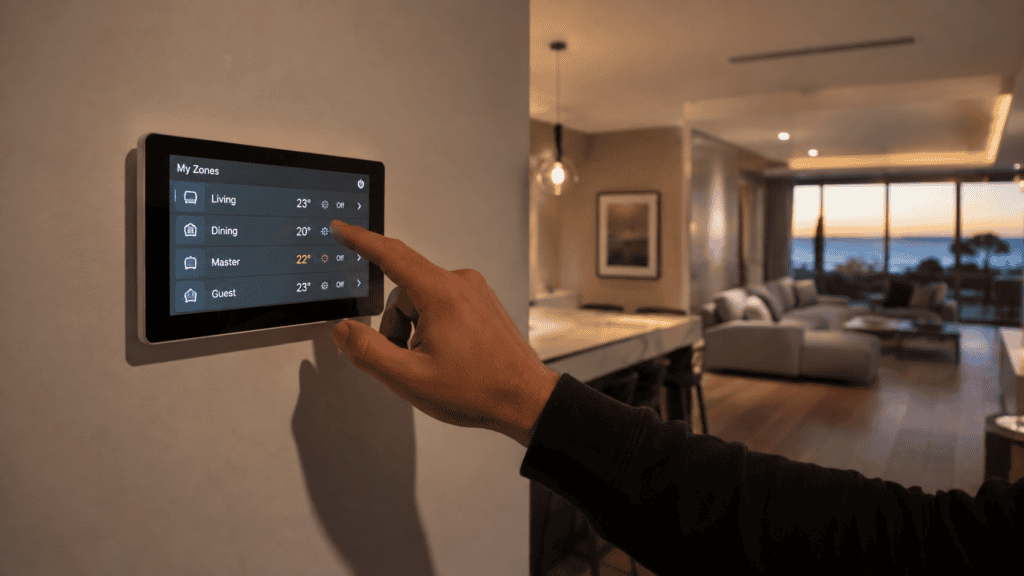
| Zones in use | Every zone you switch on adds load; unused rooms are pure waste |
| Set temperature | Each extra degree of heating or cooling makes the system work harder |
| Your electricity rate | The same hour of use costs different money on different plans |
| Filter and coil condition | A clogged system runs longer to do the same job |
How to Estimate Your Cost Per Hour
The formula is: power drawn (kW) x hours of use x your electricity rate. CHOICE prices its running-cost comparisons at 40c/kWh; at that rate, a system drawing 1kW of input power costs about 40 cents an hour to run, and one drawing 2kW costs about 80 cents. Your unit’s input power is on its label and in the manual, listed separately from its heating and cooling output.
Don’t want to do the maths by hand? Our air con calculator does the sizing side for you, and our team can walk you through expected usage for your system over the phone.
Running Costs in Winter: Reverse Cycle Heating
With Perth mornings sitting in the low teens right now, this is the season your aircon earns its keep. CHOICE notes that a reverse cycle air conditioner heats as well as cools, and calls it one of the cheapest ways to heat your home in winter. That’s because it moves heat rather than generating it, so each unit of electricity goes further than it would in a plug-in heater.
Two winter habits keep it that way. Keep the set temperature modest instead of tropical, and let the defrost cycle do its thing on frosty mornings rather than switching the unit off and on. If your system heats the whole house when you only live in half of it, the zoning section of our ducted air conditioning guide shows what zoned heating looks like.
Five Ways to Cut Your Running Costs This Year
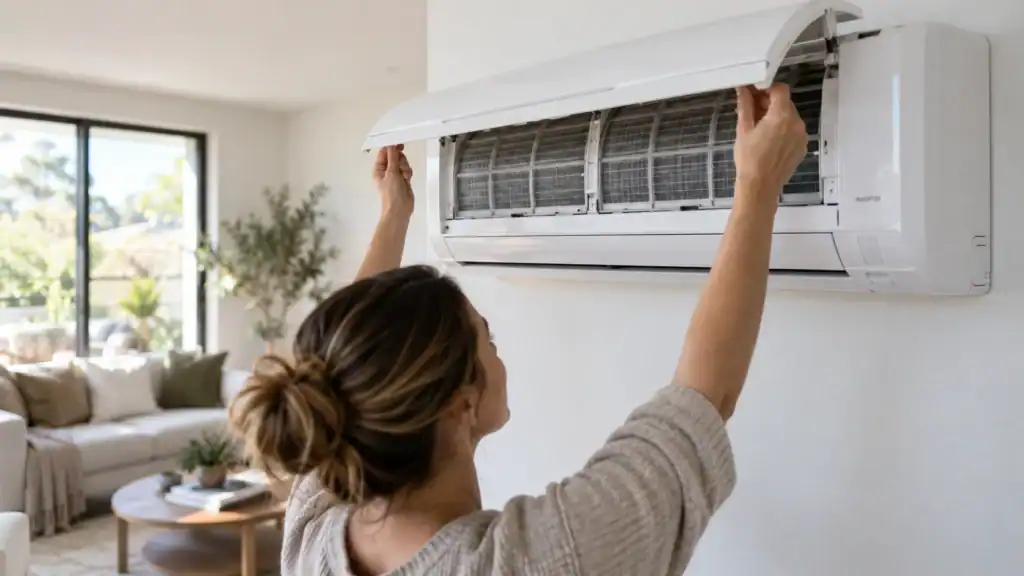
Zone ruthlessly: heat and cool the rooms you’re in, not the ones you’re not. Set the temperature for comfort, not extremes, in both seasons. Clean the filters so the system isn’t fighting its own airflow. Close up the house while the system runs. And keep the unit serviced, because a struggling system burns money before it breaks.
We’ve covered the first steps in detail in our energy efficient cooling tips for Perth homes, and if your home leaks heat, insulation plays a bigger role than most people think. For the servicing side, see how often you should service your air conditioner.
Frequently Asked Questions
Usually not in Perth’s climate. An empty house doesn’t need conditioning, and a modern system recovers quickly when you get home. The exception is a well-zoned home on a mild day, where holding a steady temperature can beat repeated hard starts. When in doubt, off beats on.
It depends on how many zones are running and what your system draws at the time. A ducted system serving one zone can cost a little more than a large split system; running every zone at once multiplies the load. Check your unit’s input power and apply your electricity rate.
Almost always, yes. A plug-in heater turns each unit of electricity into heat once. A reverse cycle system moves existing heat from outside air into your home, so the same electricity delivers several times the warmth. CHOICE rates it one of the cheapest ways to heat in winter.
Yes. Clogged filters and dirty coils force the system to run longer and draw harder to hit the same temperature, and that shows up on your bill before anything actually fails. Regular servicing keeps the system working at the efficiency you paid for.
Want a Number for Your Actual Home?
General guides only go so far. Talk to WestOz Trades about what your system should cost to run, or start with our air con calculator to get the sizing right first.