Here’s the straight answer: once a year. For most Perth homes, a professional AC service every 12 months is the minimum needed to keep your system running efficiently, your warranty valid, and your air genuinely clean. That said, your climate, your system type, and how hard you run your unit through summer can all push that number up. Read on, and we’ll walk you through exactly what applies to your situation.
Key Takeaways
- Annual professional servicing is the standard minimum for most residential AC systems in Australia
- Ducted systems and coastal Perth properties often benefit from a service every six months
- DCCEEW research found energy losses of 14-20% in poorly maintained AC systems vs well-serviced units
- Perth’s extreme summer heat and salt air accelerate component wear faster than most Australian cities
- WestOz Trades AirCare membership includes priority booking and a guaranteed 48-hour response
Once a Year is the Baseline and Here’s Why It Matters
Annual servicing is standard across the industry. The Australian Institute of Refrigeration, Air Conditioning and Heating (AIRAH) recommends yearly professional maintenance for residential systems as best practice, and most manufacturers make it a condition of your warranty. Skip a year and you may find yourself covering repair costs that should have been covered. That’s an expensive way to learn the lesson.
There’s a financial case too. DCCEEW research into common AC fault conditions found energy losses of 14 to 20% in poorly maintained systems compared to well-serviced units. In Perth, where cooling systems run flat out through months of 35-plus-degree heat, that efficiency gap adds up fast. You’re paying more to get less, and the system is wearing out faster in the process.
Think of it the same way you’d think about a car service. The car might still start and get you from A to B, but the oil is degrading, the filters are clogging, and small issues are becoming expensive ones. Your AC is no different.
Split System, Ducted or Evaporative: Does Frequency Change?
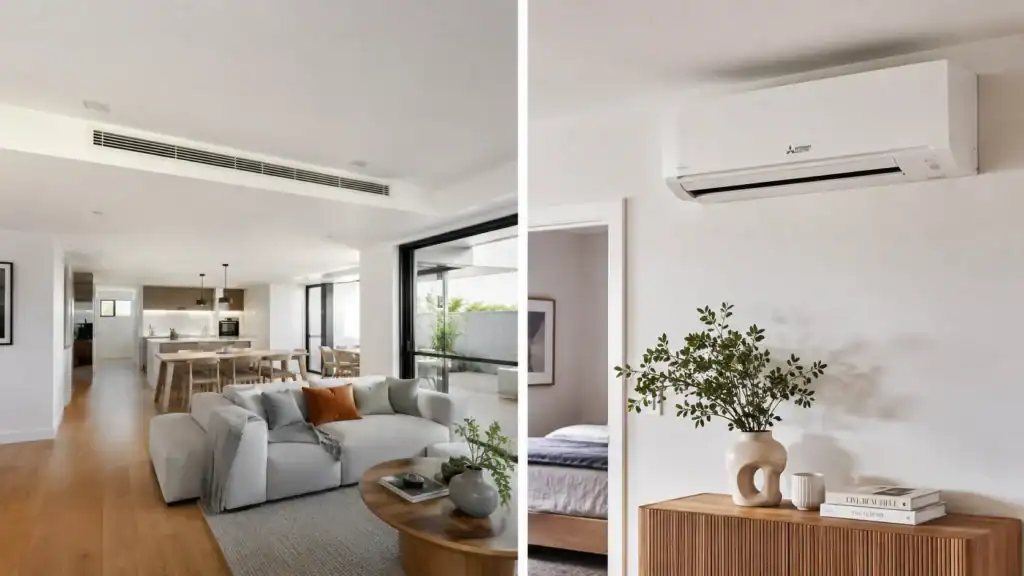
The once-a-year rule applies broadly, but your system type can shift the recommendation. The right servicing frequency depends on what you’ve got installed, how hard you run it, and where your home sits.
Split systems
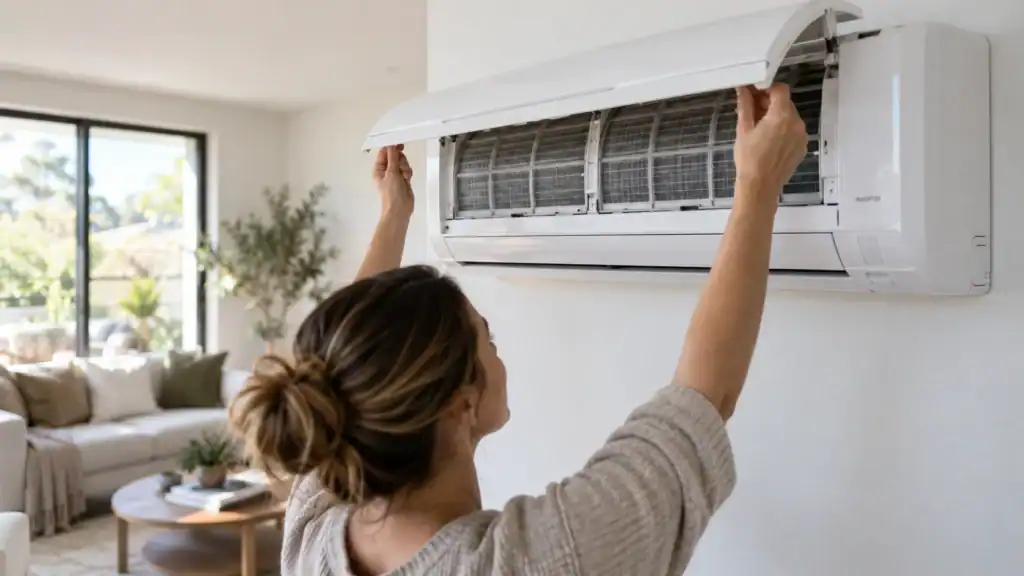
Split systems are the most common setup in Perth homes, and most respond well to annual servicing. During heavy summer use, a mid-season filter clean, which you can do yourself. Helps maintain airflow and takes pressure off the coils.
Ducted reverse cycle systems
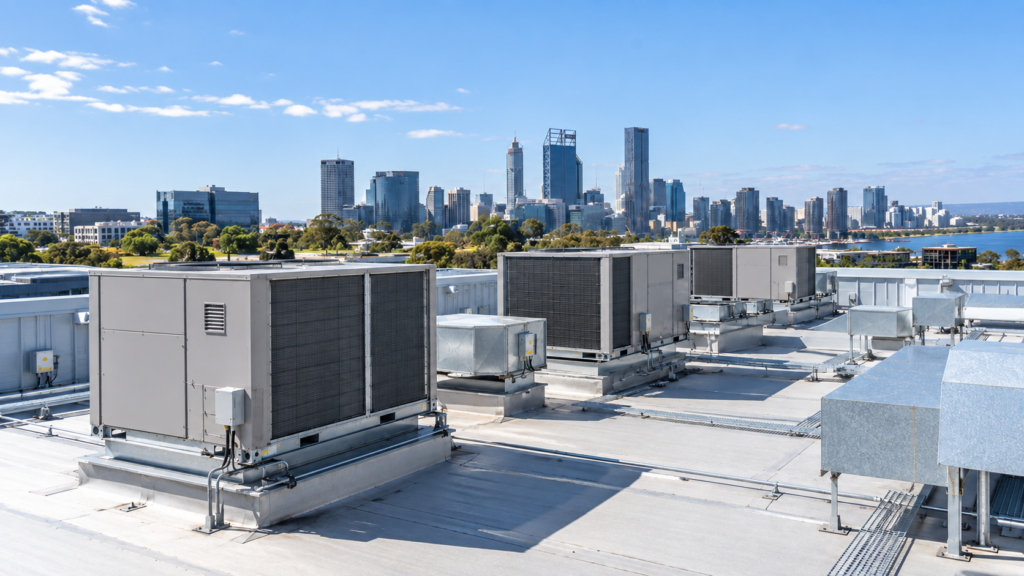
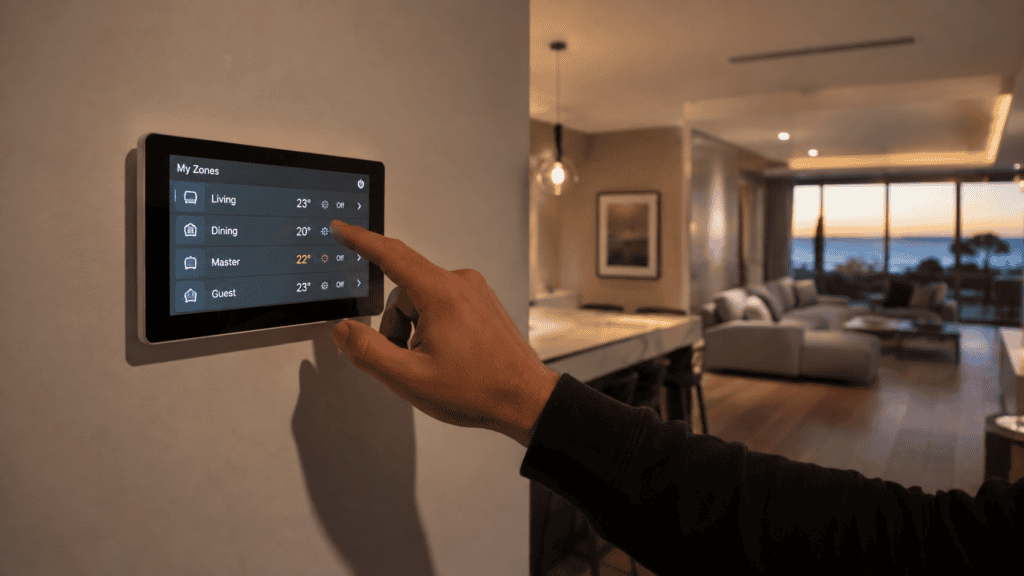
Ducted systems have more components across a larger footprint: indoor unit, outdoor compressor, ductwork, zone controllers, and return air filters. More components mean more can go wrong, and a ducted failure affects the whole house at once. For systems running year-round, we recommend a professional check every six months, particularly in older homes where duct integrity can degrade over time.
Evaporative coolers
Evaporative coolers work on a completely different principle and need their own rhythm. They require a full service at the start of the cooling season – typically September or October in Perth – to clean the pads, check the pump, and clear mineral buildup from winter. At the end of summer, a shutdown service protects the unit through the cooler months. Skip the opening service, and you risk circulating mouldy air through your home from day one of summer.
Not sure which system you have or what it needs? Our team at WestOz Trades can assess your setup and give you a clear recommendation.
What Does a Professional Air Conditioner Service Actually Include?
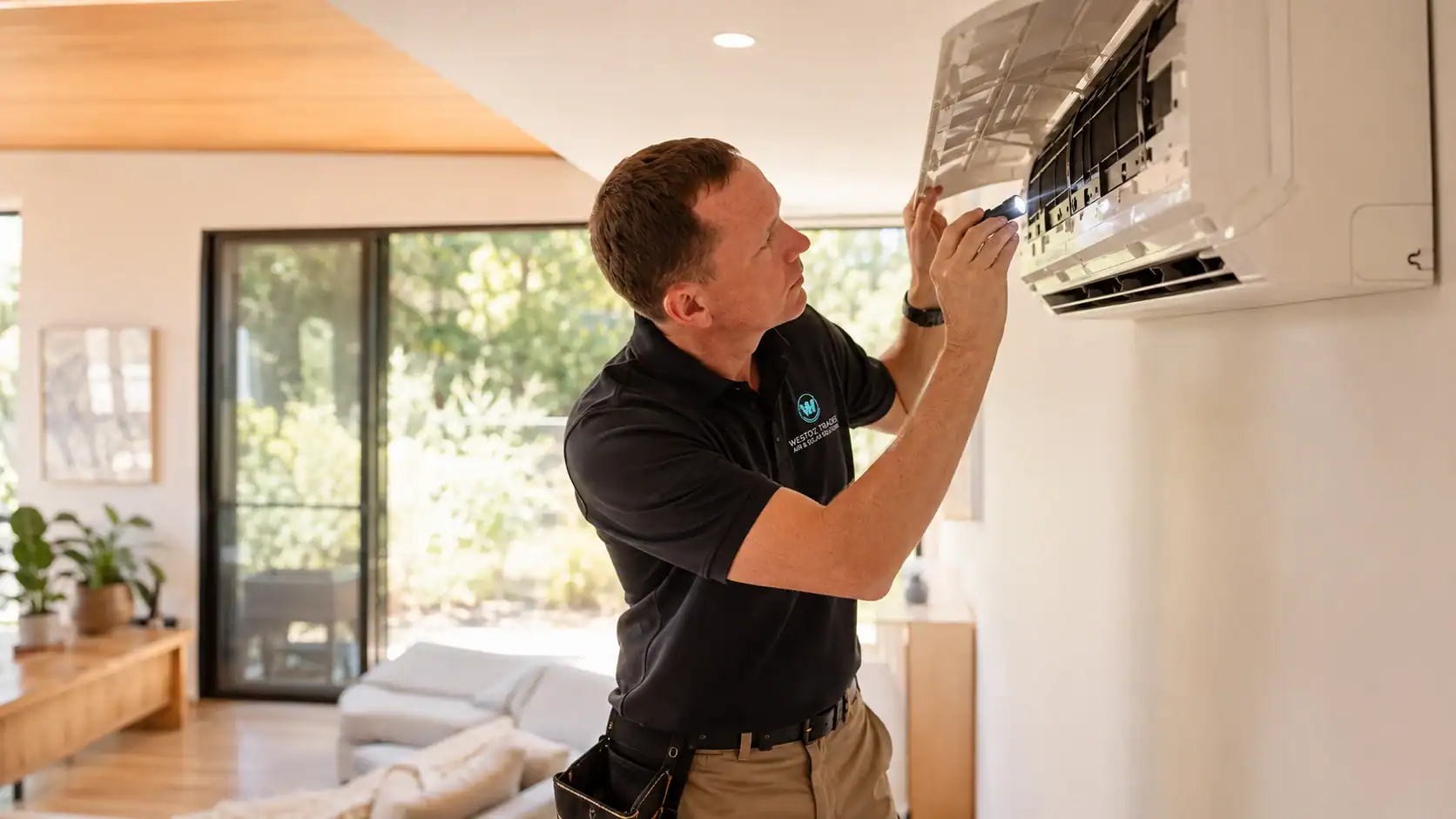
A professional service isn’t just a filter, rinse and a handshake. A thorough residential service covers eight areas that most homeowners can’t safely or effectively check themselves – and each one has a direct impact on efficiency, reliability, or system lifespan.
| What’s Checked | Why It Matters |
| Air filters (clean or replace) | Blocked filters reduce airflow and increase running costs – the most common and easily preventable problem |
| Evaporator and condenser coils | Dirty coils reduce heat transfer and force the compressor to work harder than it should |
| Refrigerant levels | Low refrigerant means poor cooling performance and long-term compressor damage |
| Electrical connections | Loose connections cause system failures or, in worst cases, become a fire risk |
| Thermostat calibration | An incorrectly calibrated thermostat runs the system longer than needed, increasing energy bills |
| Drain lines and condensate tray | Blocked drains cause water to leak into ceilings and walls – minor issue on day one, expensive damage by day thirty |
| Fan blades and motor | Dirty or imbalanced blades reduce airflow, increase noise, and accelerate motor wear |
| Outdoor unit condition | Debris, corrosion, and restricted airflow around the outdoor unit directly affect heat rejection and efficiency |
When our technicians finish a service, they walk you through what they found in plain English. No upselling on parts you don’t need. Just a clear rundown of the system’s condition and anything worth keeping an eye on.
Signs Your AC Needs a Service Before the Annual Mark
Annual servicing is the baseline, but your system might be flagging a problem well before the 12-month mark. If you notice any of the following, don’t wait, book a service now:
- Reduced airflow from vents, even on the highest fan setting
- Warm air is coming through when the system should be cooling
- Musty, mouldy, or burning smells from the vents
- Unusual noises: grinding, rattling, clicking, or squealing
- A spike in electricity bills without any change in usage
- Ice forming on the indoor or outdoor unit
- Water dripping or pooling from the indoor head unit
We’ve put together a full breakdown of these warning signs in our post on the top signs your air conditioner needs a professional service. If any of the above sound familiar, it’s worth a read before things get worse.
Catching problems early is almost always cheaper than waiting for a failure. A 42-degree Perth afternoon is not the time to discover your compressor has been struggling for three months.
Why Perth Homes Often Need More Frequent Servicing
Perth is one of the toughest climates in Australia for air conditioning equipment. The Bureau of Meteorology records an average of around five days above 40 degrees Celsius in the Perth metro area each year, with those extreme days concentrated in January and February. Your AC doesn’t get a rest in the height of summer.
Beyond the raw heat, two factors specific to Perth accelerate component wear faster than most other Australian cities.
Coastal salt air
If your home is within a few kilometres of the coast – Scarborough, Trigg, Cottesloe, City Beach, Sorrento, Floreat – salt deposits build up on your outdoor unit’s fins and coils significantly faster than in inland suburbs. This causes corrosion that reduces efficiency and shortens component life. For coastal homes, six-monthly servicing is sensible protection for what is a major household asset. We’ve covered this in detail in our post on how Perth’s coastal air affects your AC and what you can do about it.
Dust and pollen
Perth’s dry easterly winds in spring carry heavy dust and pollen loads from inland WA. These get pulled straight into your return air filters. Homes in eastern and northern suburbs – Bayswater, Yokine, Balcatta, Greenwood, Wanneroo – often need filter attention more frequently during spring than the rest of the year. A mid-season filter clean between your annual professional services is a simple and worthwhile habit.
What You Can Do Between Professional Services
You don’t have to wait for a technician to keep things ticking over. There are a few things you can safely do yourself between annual services.
Clean your filters every four to six weeks during heavy use
Most split system filters slide or clip out easily, rinse clean under a tap, air-dry in 20 minutes, and go straight back in. A visibly grey or clogged filter is already affecting your airflow and your power bill. If you’re not sure how your filter comes out, check your system manual or give us a call.
Keep the outdoor unit clear
Make sure there’s at least 30cm of clear space around the outdoor unit and that leaves, grass clippings, or debris haven’t collected on or around the fins. A blocked outdoor unit can’t reject heat efficiently, which means the compressor works harder and runs hotter.
Check at the start of summer
The first run of the season is when issues from a long off-period often surface. Switch the system on a couple of weeks before you really need it and listen for anything unusual. If something sounds or smells off, you’ll have time to get a technician in before the heat hits. Our AC calculator is also a handy tool for checking whether your system is properly sized for your space.
What you shouldn’t attempt yourself: refrigerant top-ups, coil cleaning, or checking electrical components. These require a licensed refrigeration mechanic, and handling refrigerant without a licence is illegal in Australia.
Frequently Asked Questions
A standard residential split system service in Perth typically runs between $120 and $200, depending on system size and any additional work required. Ducted system services are generally higher. Our AirCare membership offers priority booking and consistent pricing year-round, contact us for current rates.
Some basic tasks are fine for homeowners – rinsing filters and keeping the outdoor unit clear are safe DIY jobs. Any work involving refrigerant, electrical connections, or internal components must be carried out by a licensed technician. Handling refrigerant without a licence is illegal in Australia under the Ozone Protection and Synthetic Greenhouse Gas Management Act.
The most immediate risk is to your manufacturer’s warranty, which most brands require annual servicing to keep active. Beyond that, skipping services leads to reduced efficiency, higher power bills, and a shorter system lifespan. Small problems that a technician would catch early can become expensive repairs or full replacements when left unchecked.
A standard split system service usually takes between 45 minutes and 90 minutes. A full ducted system service can take two to three hours, depending on the number of zones and the system’s condition. Our technicians confirm a time window with you when booking, so you’re not waiting around all day.
Yes, our technicians need access to both the indoor and outdoor units. At the end of the visit, they’ll walk you through what they found and flag anything that needs attention. If access arrangements are unusual (gated property, second-storey unit), let us know when you book and we’ll sort it out.